Launching a new venture requires vision, grit, and market execution. However, the silent killer of early-stage companies isn't a bad product; it is running out of money. For founders operating without a massive safety net, keeping a hyper-focused eye on cash flow is the difference between scaling up and shutting down.
This is where startup booted financial modelling comes into play. A financial model isn't just a boring spreadsheet for accountants; it is a dynamic roadmap that translates your business strategy into cold, hard numbers. Whether you are aiming for high-velocity growth or plotting out the 7 steps of financial freedom for your personal journey as a founder, a robust model is your ultimate navigation tool.
This comprehensive guide takes you from the absolute basics of forecasting to advanced startup frameworks, giving you the visibility needed to scale sustainably.
Key Takeaways
Financial models allow founders to forecast future growth based on realistic operational inputs.
Bootstrapped startups must prioritize cash-flow visibility over vanity metrics like raw traffic or user signups.
A clean model changes your perspective from guessing to making data-driven strategic choices.
Routinely updating your assumptions protects your company from unexpected cash crunches.
What Is Startup Booted Financial Modelling?
At its core, startup bootstrapping financial modelling is the practice of building a mathematical summary of a company’s expenses and revenues. It blends historical financial data with future operational assumptions to predict how a business will perform under various conditions.
Why Financial Modelling Matters for Startups
For an early-stage company, a financial model acts as a financial sandbox. It lets you test business ideas before spending actual money. For example, you can simulate what happens to your cash position if you hire two new developers or drop your product price by 10%.
Without this tool, you are flying blind. Having a clear model makes it easy to handle complex tasks like determining the exact bookkeeping cost for small businesses or deciding when to expand your operations.
Common Startup Challenges addressed by Modelling:
Predicting a realistic cash runway: Knowing exactly how many months your business can survive before needing a profit spike.
Resource allocation: Deciding whether to pour capital into marketing channels or product engineering.
Scaling bottlenecks: Spotting when inventory demands or hiring rushes, will temporarily drain your available bank balance.
Foundations of Financial Modelling
To build a reliable model, you must understand the basic pillars of corporate forecasting. A weak foundation leads to inaccurate projections, rendering your entire model useless.
The foundations of financial modelling rest on four core types of forecasting:
Revenue Forecasting: Predicting your future sales volume by tracking real growth drivers like website conversions, ad spend, or sales pipeline velocity.
Expense Forecasting: Splitting your operational costs into fixed buckets (like software subscriptions or rent) and variable buckets (like payment processing fees or raw materials).
Cash Flow Forecasting: Tracking the actual timing of cash entering and leaving your bank account. This is vital because a business can be highly profitable on paper but still go bankrupt if cash is trapped in unpaid customer invoices.
Profitability Forecasting: Analyzing your gross margins and net margins to ensure that your business model can eventually generate sustainable profits.
The Role of Assumptions and Drivers
Every model is built on assumptions. These are the inputs you feed into your sheets, such as your expected customer retention rate or average order value. High-quality financial models separate these assumptions into a dedicated tab, making it simple to tweak a single number and watch it update your entire roadmap instantly.
Components of a Startup Financial Model
A professional startup financial model is built by linking several core sub-models together. Together, they create a comprehensive financial picture of your business.
1. The Revenue Model
This section isolates your pricing structures and sales channels. For a subscription software firm, it tracks recurring upgrades, downgrades, and user cancellations. For a physical brand, it models unit sales, returns, and inventory turn rates.
2. Cost Structure
Your cost block maps out every dollar required to keep the lights on. This includes payroll, marketing acquisition budgets, hosting fees, legal overhead, and routine accounting support.
3. The Core Financial Statements
A functional model must generate three integrated outputs:
The Income Statement (P&L): Shows your revenues minus your expenses over a specific period to calculate your net profit or loss.
The Cash Flow Statement: Tracks the exact movement of cash. For founders, learning how to calculate operating cash flow from this statement is a non-negotiable skill.
The Balance Sheet: Tracks your company’s assets, liabilities, and equity at a specific point in time.
4. Scenario Planning
This component allows founders to toggle between "Base Case," "Best Case," and "Worst Case" financial realities. This prepares your operation to weather unexpected downturns without collapsing.
Startup Financial Modelling Process (Step-by-Step)
Building a financial model from scratch can feel overwhelming, but breaking it down into a systematic, repeatable process makes it entirely manageable.
Step 1: Define Your Business Model
Before typing any numbers into a spreadsheet, you must clarify how your startup actually makes money. Are you a subscription-based Software-as-a-Service (SaaS) platform, an e-commerce marketplace, or an agency providing specialized virtual cfo services? Your business model dictates your revenue logic.
Step 2: Estimate Revenue Drivers
Do not just guess a random revenue number. Instead, break your revenue down into its core operational drivers. If you run a digital storefront, your drivers are:
Website Traffic * Conversion Rate * Average Order Value
By mapping these drivers out, your revenue projections become tied to actionable marketing milestones.
Step 3: Forecast Expenses
List out your baseline costs. Start with your fixed operational expenses (OpEx), such as software tools, web hosting, and office workspace rentals. Then, add your variable costs, including transaction processing fees and packaging materials.
Step 4: Build a Cash Flow Forecast
Map out when cash actually hits your bank account versus when it leaves. If you offer corporate services, you might perform the work in January but not receive the client's payment until March. Tracking this lag protects you from severe, sudden cash crunches.
Step 5: Create Scenarios
Always build a dynamic assumption dashboard. This allows you to toggle between a conservative base case and an optimistic growth case. This step is a core part of mastering financial and business modelling because it keeps your strategy grounded in reality.
Step 6: Monitor and Update
A financial model is not a set-it-and-forget-it document. At the end of every single month, plug your actual financial results into your sheet right next to your forecasts. Analyze why your projections missed the mark and adjust your future assumptions accordingly.
Financial Modelling for Bootstrapped Startups
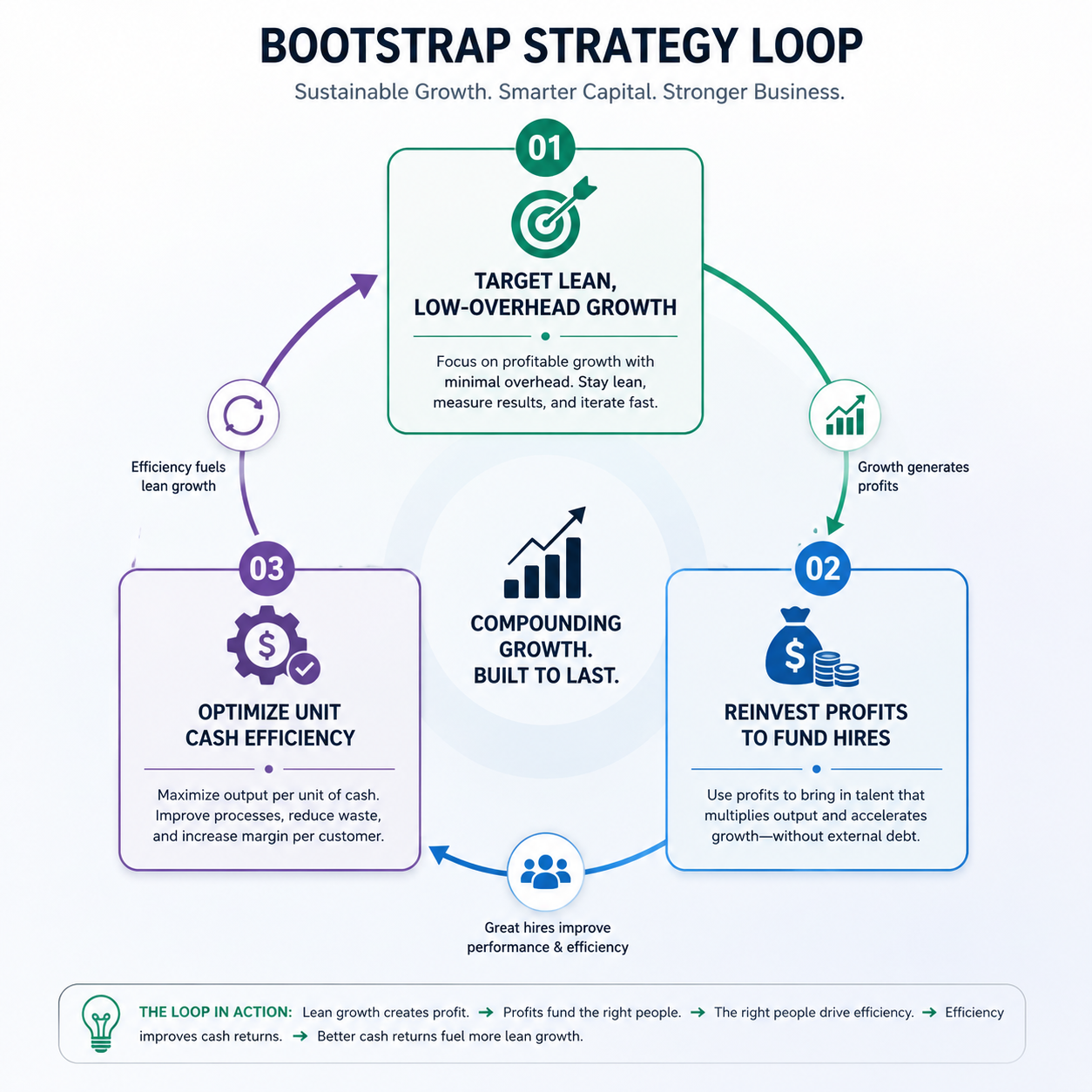
While venture-backed startups often focus entirely on rapid user expansion, bootstrapped operations must build their strategies around absolute survival and self-sustainability. Your financial model must reflect this lean reality.
Managing Limited Capital: When you are funding operations directly out of your own pocket or early revenue, every dollar spent must have a clear, measurable return on investment (ROI). Your model should flag non-essential expenses instantly.
Prioritizing Cash Flow Over Paper Profit: A bootstrapped business cannot survive on high paper profit if its bank account is empty. Focus your modelling efforts on liquid cash availability to ensure you can easily cover ongoing costs like your monthly bookkeeping costs for small businesses.
Extending Your Runway Sustainably: Your cash runway is the amount of time your business can keep running before running out of money. Bootstrapped models must focus on organic revenue loops to systematically extend this runway without relying on outside investment infusions.
Key Startup Metrics Used in Financial Modelling
To turn a basic spreadsheet into a powerful strategic growth tool, you must track core performance indicators. These metrics act as the vital signs of your business model.
1. Customer Acquisition Cost (CAC)
The total amount of money spent on marketing and sales to win a single new customer.
CAC = Total Marketing Expenses \ Number of New Customers Acquired
2. Lifetime Value (LTV)
The total net revenue a single customer is expected to spend with your business over their entire relationship.
3. Burn Rate
The speed at which your company spends its available cash reserves to cover monthly overhead before turning a net profit. If your fixed expenses are $15,000 a month and your organic revenue is $5,000, your net monthly burn rate is a flat $10,000.
4. Cash Runway
The number of months your business can continue to operate before running completely out of funds.
Runway = Total Cash Balance \ Monthly Net Burn Rate
5. Gross Margin
The percentage of total revenue your business retains after subtracting the direct costs associated with delivering your service or product. High gross margins mean your business can scale efficiently without linear cost increases.
6. MRR & ARR (Monthly and Annual Recurring Revenue)
The foundational metrics for any subscription-based enterprise. Your model must track your new MRR additions, upgrades, and revenue lost to user cancellations (churn) to project long-term financial health accurately.
Financial and Business Modelling Explained
Founders frequently confuse financial modelling with business modelling. While they sound identical, they serve two distinct purposes in your strategic planning process.
Business Modelling: This is your high-level conceptual framework. It defines who your target customers are, what problem you are solving, your value proposition, and your delivery channels. Think of it as the blueprints for your corporate engine.
Financial Modelling: This is the mathematical validation of your business model. It translates your strategic blueprints into explicit spreadsheets of numbers, inputs, and formulas to see if your business model can actually generate a profit over time.
How They Work Together
A successful startup requires both frameworks to operate in perfect harmony. Your business model outlines a strategy, and your financial model tests that strategy against economic realities. If your business model involves selling low-cost consumer products, your financial model will quickly highlight that you need massive traffic volumes to cover your baseline operating costs.
Understanding the interaction between financial and business modelling keeps you from pursuing unviable markets. It ensures your operational milestones align directly with your available cash runway.
Real Startup Financial Modelling Example
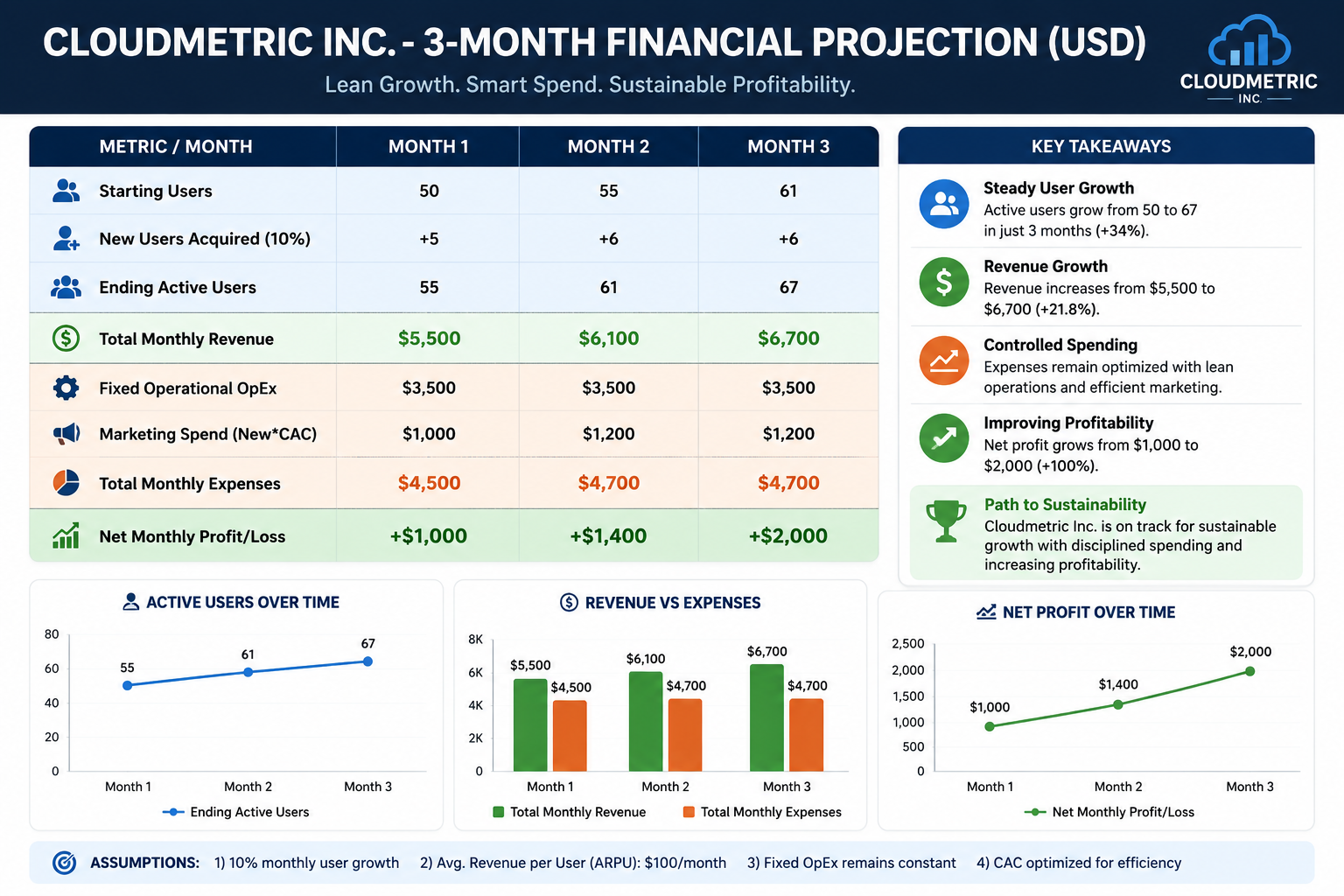
To see how these concepts function in a real-world scenario, let’s look at a hypothetical B2B Software-as-a-Service (SaaS) startup called CloudMetric.
The Startup Scenario
Product Price: $100 per month per user.
Starting Customer Base: 50 active users ($5,000 MRR).
Monthly Growth Rate Assumption: 10% month-over-month increase in signups.
Fixed Monthly Overhead: $3,500 (Hosting, tools, lean accounting support).
Customer Acquisition Cost (CAC): $200 per new user.
Strategic Analysis of the Example
This basic projection shows a healthy, cash-flow positive trajectory. Because the gross margins are high, the business organically generates enough cash to cover its ongoing user acquisition costs without draining its core reserves.
If this founder needed to scale faster by hiring an outside agency, this clean data map would allow them to accurately estimate the impact of those extra costs on their overall runway.
How to Get Financial Modelling Experience
You do not need an advanced master's degree in corporate finance to learn how to build accurate startup models. Developing this skill set requires consistent, practical application.
Practice with Real Projects: Start by building a mock financial model for a basic business idea you understand well, such as a local digital agency or a simple e-commerce storefront.
Deconstruct Startup Case Studies: Analyze public financial reports and teardowns of successful tech enterprises. Reviewing how major brands structure their historical operational costs provides a realistic baseline for your own models.
Master Spreadsheet Mechanics: Spend time learning advanced lookup formulas, dynamic logic statements, and data organization principles within Excel or Google Sheets.
If you want to discover how to get financial modelling experience that opens up professional doors, look for freelance modelling opportunities with early-stage founders or apply for internship positions at boutique financial consulting firms. Building custom tracking sheets for diverse business models accelerates your understanding of cash management frameworks much faster than reading raw theory.
Software for Financial Modelling
Founders no longer have to rely exclusively on static, confusing spreadsheets. A vast ecosystem of dynamic, automated tools exists to simplify your tracking workflows. Choosing the right platform depends entirely on your operation's growth stage and technical needs.
Financial Modelling Software Matrix
Software Platform | Ideal User Base | Major Strengths | Notable Drawbacks |
Microsoft Excel | Finance-native teams, advanced analysts | Absolute modelling flexibility; infinite customization | Manual data entry; highly prone to broken cell links |
Google Sheets | Collaborative early-stage co-founders | Free tier; easy real-time editing and link sharing | Performance slowdowns with massive datasets |
Causal | Mid-market teams, data-driven startups | Uses multi-dimensional natural language variables over grid cells | Steeper learning curve than standard sheets |
Finmark | Early-stage bootstrapped operations | Simple UI tailored for startups; zero finance degree required | Rigid customization limits for edge-case models |
ProjectionHub | Founders pitching to outside lenders | Excellent templates designed for specific industries | Less dynamic for daily, rolling monthly actuals |
Growth Navigation Using Startup Financial Models
A great financial model isn't just a backwards-looking report for tax season. It is a live dashboard designed to help you proactively navigate scaling friction.
By tracking your operational variables, you can spot cash bottlenecks long before they threaten your runway. For instance, if your growth projections require doubling your sales team in Q3, your model will reveal exactly how much upfront cash you need to cover payroll before those new reps close their first deals.
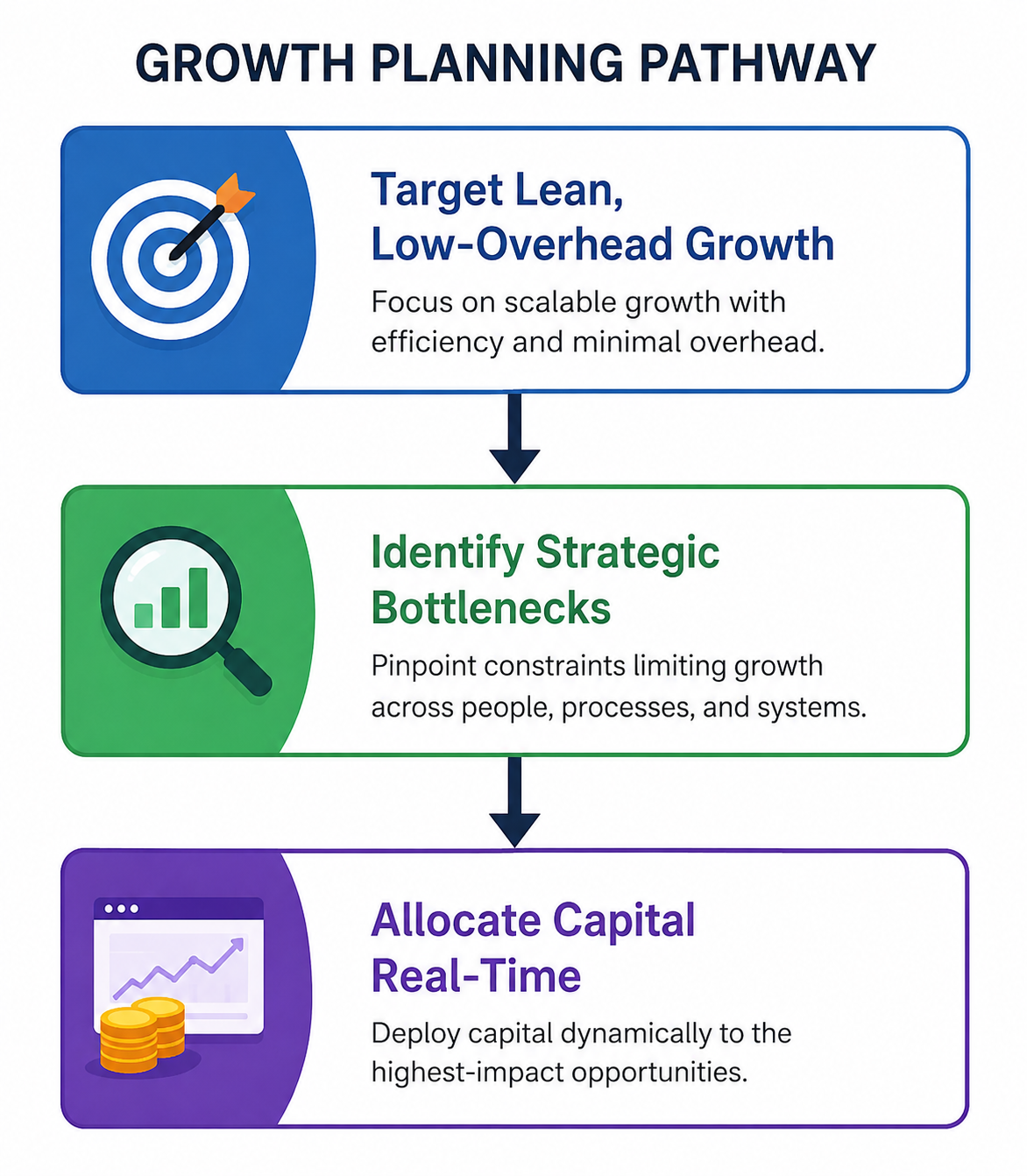
Using clear data points prevents you from blindly chasing vanity metrics. It tells you exactly how much money can be safely reinvested back into product engineering or paid acquisition loops without compromising your financial safety net. If you are tracking these complex expansion phases across multiple departments, having a clear mathematical model helps you make confident strategic choices.
Advanced Startup Financial Modelling Techniques
As your business matures and secures market validation, your models must evolve beyond basic, flat linear growth assumptions. Advanced stress-testing models help you manage deep market uncertainty.
Sensitivity Analysis: This process involves changing a single critical variable, such as your customer churn rate, while keeping all other factors constant. This isolates exactly how sensitive your total cash runway is to specific operational shifts.
Scenario Analysis: Unlike sensitivity analysis, scenario analysis updates multiple variables simultaneously. This allows founders to compare distinct business futures side-by-side (e.g., a "Global Recession Case" vs. a "Hyper-Growth Case").
Cohort Analysis: This groups your users by the exact month they signed up to track behaviour variations over time. This metric is a non-negotiable step when mapping out an advanced fractional CFO for a startup's structural layout.
Unit Economics Modelling: This strips away your high-level corporate overhead to focus exclusively on the profitability of a single customer transaction. If your individual unit economics do not make sense, scaling your business will only burn your available cash faster.
Financial Modelling Articles and Learning Resources
Mastering the mechanics of corporate finance is an ongoing journey. To sharpen your forecasting skills, you should routinely study high-quality educational materials and industry publications.
Beginner Resources
If you are completely new to spreadsheets, start with introductory content focusing on fundamental layout architecture. Platforms like Investopedia Finance provide clear breakdowns of essential accounting concepts, short-term budgeting, and basic ledger formatting.
Advanced Resources
Once you understand the basic mechanics, study deep-dive financial modelling for startups published by platforms like Saastr or OpenView Venture Partners. These hubs offer specialized guides on complex cohort analysis, churn modelling, and enterprise SaaS valuation techniques.
Industry Publications
To stay updated on modern corporate finance trends, review whitepapers from major firm repositories. Reading corporate finance commentary from elite firms keeps your tracking strategies aligned with current global standards.
Financial Modelling CFI Resources
If you want a structured, universally recognized path to professional-grade forecasting skills, the Corporate Finance Institute (CFI) is the industry gold standard.
What Is CFI?
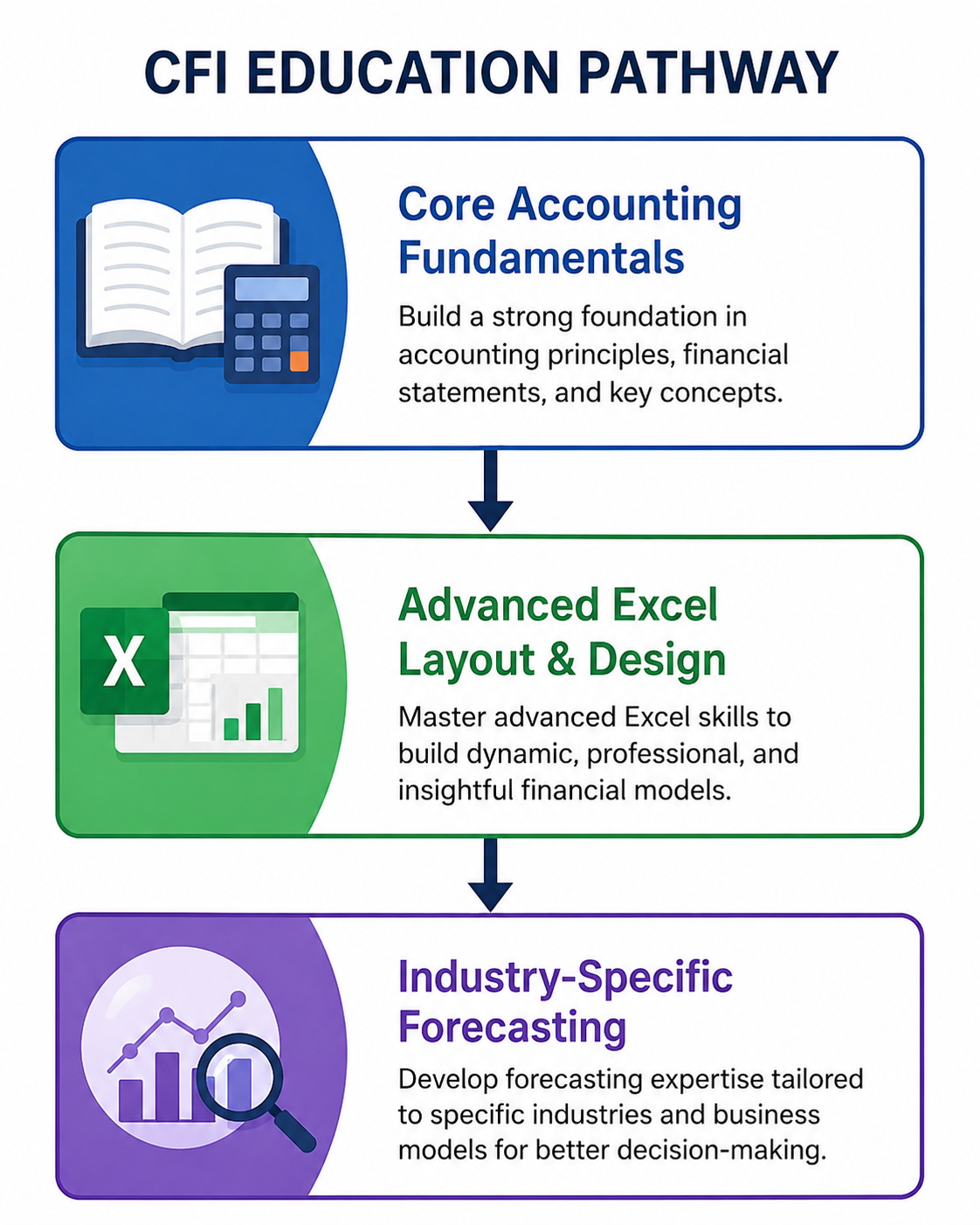
CFI is a premier global provider of online financial training and certification programs. It bridges the gap between academic business theory and real-world spreadsheet execution.
Popular Courses & Certifications
FMVA (Financial Modelling & Valuation Analyst): A comprehensive certification covering advanced Excel layout mechanics, structuring corporate assumptions, and valuation methods.
Startup Specific Modules: Dedicated standalone mini-courses focused purely on early-stage tech forecasting, unit economics, and building cap tables.
Leveraging specialized financial modelling CFI templates or enrolling in their foundational tracks saves you hundreds of hours of frustrating trial-and-error when building your first corporate model.
Financial Modelling or Modelling: Which Is Correct?
When searching for templates or reading industry articles online, you will notice two distinct spellings used across different publications.
Financial Modelling (Single 'L'): This is the official standard for American English. It is preferred by US-based venture capital firms, Wall Street institutions, and American tech startups.
Financial Modelling (Double 'L'): This is the official spelling framework for British English. It is utilized across the United Kingdom, Canada, Australia, and parts of Europe.
Common Financial Modelling Mistakes
Even brilliant product innovators regularly build flawed spreadsheets. Spotting these five common traps early prevents you from relying on misleading forecasts.
Unrealistic Revenue Assumptions: Projecting a flat 15% month-over-month sales increase for three straight years without tying it to actual marketing spend is a recipe for disaster.
Ignoring Cash Flow Timing: Assuming revenue hits your bank account the exact day a contract is signed can lead to immediate operational shortfalls.
Overestimating Viral Growth: Relying entirely on cheap organic word-of-mouth loops instead of calculating real paid customer acquisition channels kills runways.
Poor Scenario Planning: Building a model that only tracks an optimistic "best-case" scenario leaves your team completely unprepared for economic downturns.
Not Updating Models: Treating your model as a static document instead of updating it monthly with actual accounting data makes it irrelevant within a single quarter.
Best Practices for Startup Financial Modelling
To ensure your financial roadmap remains an accurate asset for strategic growth, ground your planning workflow in these core operating principles:
Use Conservative Assumptions: Always underestimate your early sales velocity and overestimate your operational expenses by 10% to 15% to build a realistic financial cushion.
Review Actuals Monthly: Dedicate time at the close of every month to input your real bank metrics directly alongside your forecasts to correct baseline errors.
Build Multi-Scenario Dashboards: Maintain distinct tabs for baseline, downside, and upside realities so your leadership team can shift strategies instantly if market conditions turn volatile.
Prioritize Your Cash Position: Focus your main display graphs on raw cash runway availability rather than paper profitability.
Track Key Unit Metrics: Keep your focus locked onto micro-indicators like your CAC-to-LTV ratios to verify that your scaling model is fundamentally healthy.
Frequently Asked Questions
What is startup booted financial modelling?
It is the process of building a dynamic, numbers-based spreadsheet model designed specifically for early-stage companies to forecast revenues, track expenses, and manage limited cash positions safely.
Why is financial modelling important for startups?
It acts as a strategic sandbox, allowing founders to test business decisions, calculate exact runway limits, and visualize the long-term impact of operational spending before deploying capital.
What are the foundations of financial modelling?
The core foundations of financial modelling rely on four critical tracking components: revenue projections, expense mapping, cash flow timing, and long-term profitability analysis.
Which software is best for financial modelling?
Microsoft Excel remains the king for complex custom modelling, while Google Sheets is ideal for real-time collaboration. Specialized tools like Finmark or Causal offer streamlined interfaces tailored for fast startup setups.
How do founders build startup financial models?
Founders start by outlining their explicit business revenue logic, mapping out fixed and variable operational costs, and constructing an integrated cash flow forecast to monitor ongoing runway.
How can I get financial modelling experience?
You can build your skills by downloading open-source startup templates, deconstructing public financial case studies, and creating practice models for mock business scenarios.
Conclusion
Navigating the early growth phases of a company without a clear financial model is like captaining a ship in a storm without a compass. For bootstrapped founders, staying on top of your financial metrics is a fundamental survival skill.
A great financial model is a living, breathing roadmap. It translates your conceptual ideas into explicit, actionable milestones. By using realistic drivers, monitoring monthly deviations, and stress-testing your assumptions, you build an efficient, data-backed enterprise ready for stable scaling.
Take the time to open up a sheet, define your primary cost drivers, and map out your runway today. The clarity you gain will directly protect your business, guide your team's resource choices, and solidify your path toward long-term operational success.